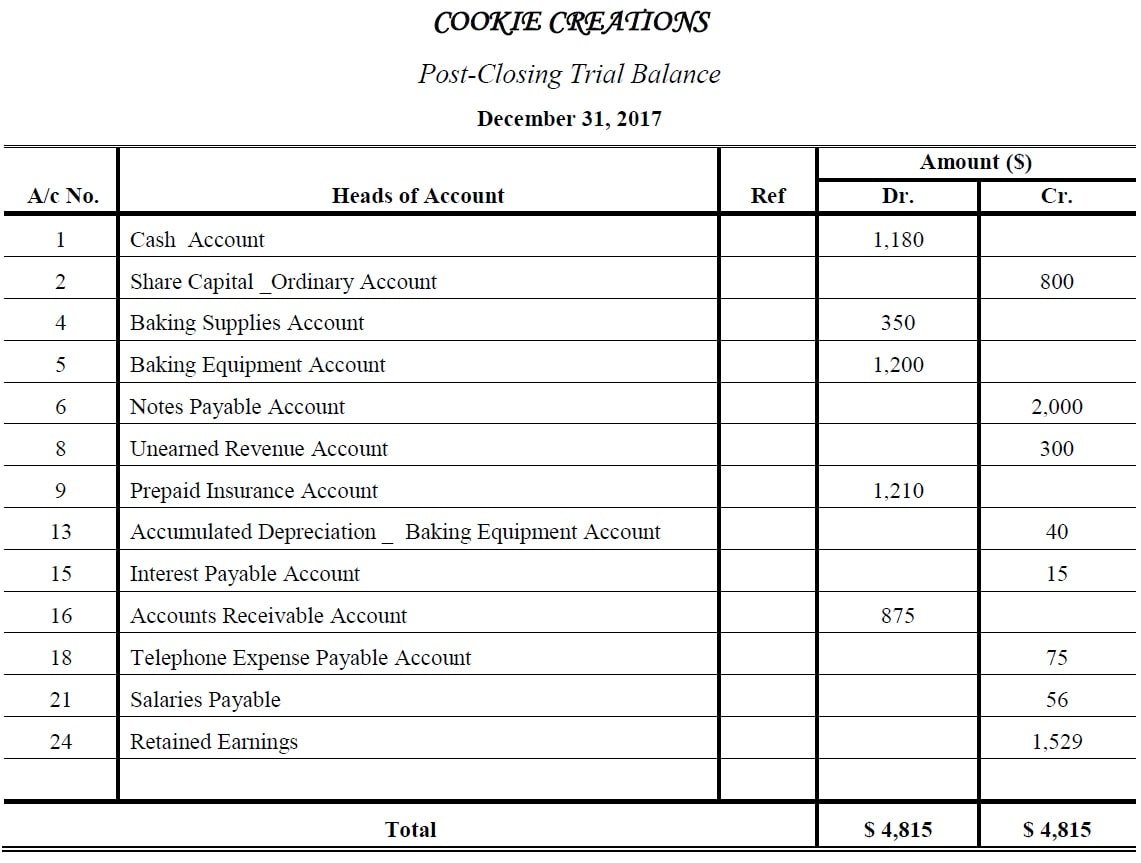
The salon had previouslyused cash basis accounting to prepare its financial records but nowconsiders switching to an accrual basis method. You have beentasked with determining if this transition is appropriate. Hence, the trial amortization definition balance includes all considerable adjustments, which is termed as adjustment trial balance. There are instances when companies end up missing out mentioning the transactions that have occurred in the bookkeeping records.
IFRS CONNECTION
- There is also a similarity between the adjusted and unadjusted trial balance in which the total of debit balances must equal the total of credit balances in both types of trial balance.
- After posting the above entries, they will now appear in the adjusted trial balance.
- If they aren’t equal, the trial balance was prepared incorrectly or the journal entries weren’t transferred to the ledger accounts accurately.
- The general purpose of producing a trial balance is to ensure that the entries in a company’s bookkeeping system are mathematically correct.
- Even though they are the same numbers in the accounts, the totals on the worksheet and the totals on the balance sheet will be different because of the different presentation methods.
For example, Celadon Groupmisreported revenues over the span of three years and elevatedearnings during those years. The total overreported income wasapproximately $200–$250 million. This gross misreporting misledinvestors and led to the removal of CeladonGroup from the New York Stock Exchange. Not onlydid this negatively impact CeladonGroup’s stock price and lead to criminalinvestigations, but investors and lenders were left to wonder whatmight happen to their investment.
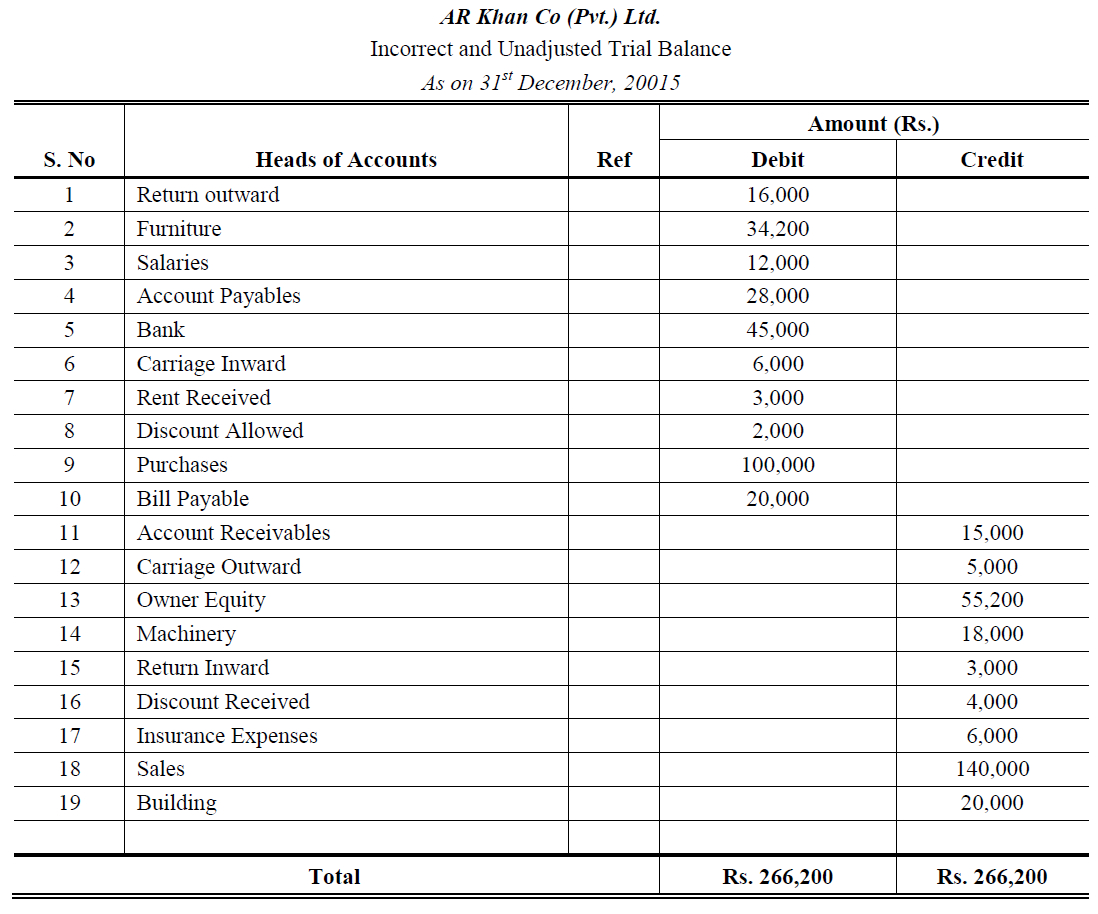
Second method – inclusion of adjusting entries directly into unadjusted trail balance:
Such uniformity guarantees that there are no unequal debits and credits that have been incorrectly entered during the double entry recording process. However, a trial balance cannot detect bookkeeping errors that are not simple mathematical mistakes. To prepare the financial statements, a company will look at the adjusted trial balance for account information. From this information, the company will begin constructing each of the statements, beginning with the income statement.
The Importance of Accurate Financial Statements
A trial balance is a bookkeeping worksheet in which the balances of all ledgers are compiled into debit and credit account column totals that are equal. A company prepares a trial balance periodically, usually at the end of every reporting period. The general purpose of producing a trial balance is to ensure that the entries in a company’s bookkeeping system are mathematically correct. Looking at the income statement columns, we see that all revenue and expense accounts are listed in either the debit or credit column. This is a reminder that the income statement itself does not organize information into debits and credits, but we do use this presentation on a 10-column worksheet. The preparation of the statement of cash flows, however, requires a lot of additional information.
How to prepare an adjusted trial balance
As you have learned, the adjusted trial balance is an importantstep in the accounting process. But outside of the accountingdepartment, why is the adjusted trial balance important to the restof the organization? An employee or customer may not immediatelysee the impact of the adjusted trial balance on his or herinvolvement with the company.
Streamline your accounting and save time
In a manual accounting system, an unadjusted trial balance might be prepared by a bookkeeper to be certain that the general ledger has debit amounts equal to the credit amounts. After that is the case, the unadjusted trial balance is used by an accountant to indicate the necessary adjusting entries and the resulting adjusted balances. The adjusted balances are summed to become the adjusted trial balance. Treat the income statement and balance sheet columns like a double-entry accounting system, where if you have a debit on the income statement side, you must have a credit equaling the same amount on the credit side. In this case we added a debit of $4,665 to the income statement column. This means we must add a credit of $4,665 to the balance sheet column.
You record all your accounting transactions and post them to the general ledger, then assess the debit and credit totals. When you prepare a balance sheet, you must first have the mostupdated retained earnings balance. To get that balance, you takethe beginning retained earnings balance + net income – dividends.If you look at the worksheet for Printing Plus, you will noticethere is no retained earnings account.
Debits and credits of a trial balance must tally to ensure that there are no mathematical errors. However, there still could be mistakes or errors in the accounting systems. A trial balance can be used to assess the financial position of a company between full annual audits.
Unearned revenue had a credit balance of $4,000 in the trial balance column, and a debit adjustment of $600 in the adjustment column. Remember that adding debits and credits is like adding positive and negative numbers. This means the $600 debit is subtracted from the $4,000 credit to get a credit balance of $3,400 that is translated to the adjusted trial balance column. The 10-column worksheet is an all-in-one spreadsheet showing the transition of account information from the trial balance through the financial statements. Accountants use the 10-column worksheet to help calculate end-of-period adjustments.
If you combine these two individual numbers ($4,665 –$100), you will have your updated retained earnings balance of$4,565, as seen on the statement of retained earnings. Looking at the asset section of the balance sheet, AccumulatedDepreciation–Equipment is included as a contra asset account toequipment. The accumulated depreciation ($75) is taken away fromthe original cost of the equipment ($3,500) to show the book valueof equipment ($3,425).