
This includes the cost of materials, labor, equipment, and any overhead expenses. The following examples illustrate standard transactions throughout a construction project lifecycle, ensuring costs are properly recorded in compliance with accounting standards. Another objective of recording construction in progress is scrutiny and audit of accounts. The construction in progress can be the largest fixed asset account due to the possibility of time it can stay open.
- A construction project is deemed substantially complete and ready for its intended use or sale when it has reached a state where it can perform its designed function.
- Retainage can be best explained as a safety net — a certain percentage of the contract’s total value (typically 5% to 10%) is held back until project completion or a pre-decided date.
- It helps organizations track expenses for assets under development, ensuring accurate financial reporting and better control over costs.
- Construction in process accounting must reflect these changes accurately in the CIP account.
- Overhead costs, encompassing administrative expenses and managerial salaries, contribute to the overall financial burden and need to be properly accounted for in financial reports.
Examples of Construction in Progress Accounting
Straight-line depreciation is the most commonly used method in construction in progress accounting. It involves dividing the asset’s cost by its useful life and allocating an equal amount of the cost to each accounting period over the asset’s life. For example, Planyard automatically updates budgets as costs are recorded, ensuring real-time accuracy without the need for redundant data entry.
Challenges and Considerations in CIP Accounting
Strong CIP accounting is a necessity for accounting teams in the farming, transportation, or construction industries. CIP accounting is used for long-term capital assets under construction or development that will eventually appear on the balance sheet as fixed assets. These projects represent significant investments in physical infrastructure, facilities, or major equipment installations. Construction in Progress (CIP) is a long-term asset account on a contractor’s balance sheet. It accumulates all the direct costs—like labor, materials, and subcontractor fees—incurred for a construction project that is not yet complete. Construction projects are complex undertakings, and their true cost extends far beyond the readily identifiable direct materials and labor.
Transition Completed Projects

Sage Fixed Assets – Planning lets you manage and track all the moving parts of your capital projects before they officially become fixed assets. Upon project completion, the company transfers the CIP balance to the “Buildings” fixed asset account, and depreciation begins. Instead of immediately expensing these costs, they are recorded as CIP on the balance sheet. As the software development progresses, the company continues to accumulate costs and updates the CIP account accordingly. Overhead costs, encompassing administrative expenses and managerial salaries, contribute to the overall financial burden and need to be cip accounting properly accounted for in financial reports.

Understanding Construction-in-Progress and GAAP PVM Accounting
Construction-work-in-progress accounts can be challenging to manage without proper training and experience. Most cip accounting companies hire a chief financial officer to maintain these records and avoid costly accounting errors. By tracking project costs in real-time, businesses can identify budget overruns early and adjust accordingly. In the construction industry, managing project costs accurately is critical for financial transparency and long-term success. Construction-in-progress accounting plays a vital role in tracking expenses for projects still in development. Construction-in-progress (CIP) accounting is an essential tool for businesses managing long-term projects or significant asset construction.
Construction Stage
This method requires breaking the total capitalized cost into significant components, such as the roof, HVAC system, and structural shell. Each component is then depreciated separately based on its own estimated useful life. For financial reporting under Generally Accepted Accounting Principles (GAAP), management estimates the useful life based on physical wear, obsolescence, and legal constraints. The company also estimates the salvage value, which is the net amount expected to be received when the asset http://steraviation.com/matching-concept-in-accounting-how-it-works-real/ is retired.
The Capitalization and Transfer Process
By tracking costs and progress in real-time, companies can make more informed decisions about resource allocation and project management. This level of detail isn’t typically available in traditional accounting systems. The purpose of construction in process accounting is to track construction costs as assets until the project is completed and https://www.bookstime.com/ ready for use. Fixed assets under construction represent Construction in Progress (CIP) and are recorded in a similar named general ledger account. They remain in such an account until the assets are put in service, at which time the costs of the assets are transferred into respective property, plant and equipment accounts.
Senior Manager Financial Reporting jobs
- With a footprint across Virginia, Pennsylvania, West Virginia, and Kentucky, our client develops, constructs, and operates utility-scale solar energy projects.
- Hire an experienced accountant or CFO to manage CIP accounts and navigate complex accounting requirements.
- A well-maintained General Ledger is more than just a record; it’s a powerful tool for profitability and risk management.
- It can also erode investor confidence and obscure a company’s true financial health.
- CIP appears under the Property, Plant, and Equipment (PP&E) section, reflecting the value of ongoing construction projects.
Construction-in-Progress (CIP) accounting plays a vital role in ensuring that costs are accurately tracked and financial statements reflect the true state of ongoing projects. Robust CIP accounting also ensures that all costs are appropriately capitalized onto the balance sheet. When the asset is ready for its intended use, the accumulated CIP expenses can then be transferred to the appropriate fixed asset account and depreciated accordingly.
Navigating Crypto Frontiers: Understanding Market Capitalization as the North Star
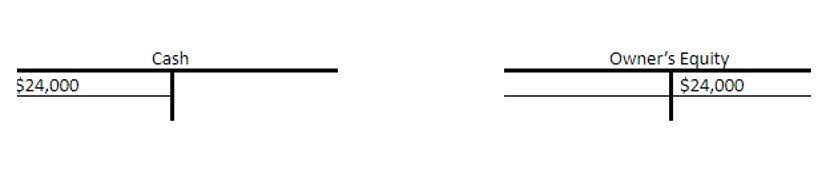
This enables depreciation to begin, distributing the asset’s cost over its useful life. It ensures clarity for stakeholders and auditors by providing an accurate view of active commitments in ongoing projects. By separating construction investments, CIP maintains clear financial records that comply with accounting standards like GAAP. Construction-in-progress (CIP) accounting is a system for tracking and recording all expenses incurred during the construction or development of a fixed asset. Some countries or tax jurisdictions may allow businesses to claim tax deductions or benefits related to the costs incurred during the construction or development phase. By capitalizing these costs, companies can more accurately calculate and support their tax deductions, ensuring compliance with applicable tax laws.